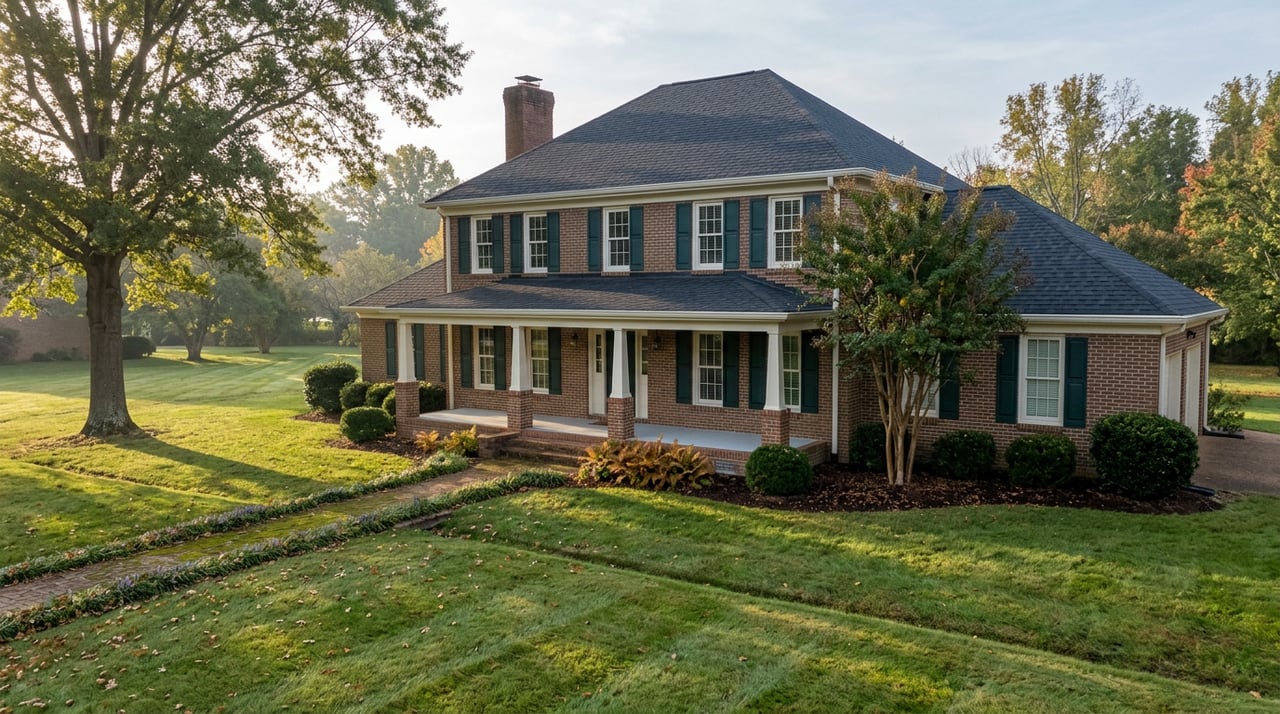
Most buyers walk into a Lexington closing assuming the termite letter is a formality for the other guy's house. The older place with the crawl space nobody's opened since the Clinton administration, maybe. Not the five-year-old build in a subdivision with a builder's warranty still technically active. That assumption is wrong often enough that it's worth correcting before you're the one staring at a "not clear" report three weeks before closing.
Here's the pattern I keep running into, both as an agent and from years of walking crawl spaces with a home inspector's license: newer Lexington homes are showing up with the same moisture-related flags as houses built forty years earlier. Not termites, necessarily. Moisture. And moisture is exactly what the report is built to catch.
The Wood Infestation Report Behind the Nickname
Everyone calls it a termite letter. Its actual name is the Official South Carolina Wood Infestation Report, and it's a standardized form regulated statewide by Clemson University's Department of Pesticide Regulation. A licensed pest control operator inspects the accessible wood in a home, usually the crawl space, sills, and foundation framing, and documents three things:
- Active or past wood-destroying organisms, including subterranean termites, wood-boring beetles, and decay fungi
- Existing structural damage from those organisms, whether the infestation is still active or not
- Conditions that invite future problems, including standing water, wood-to-soil contact, poor ventilation, and elevated moisture readings
That third category is where the surprise usually lives. According to DeBruin Law Firm, a moisture reading above roughly 20 percent inside a crawl space gets flagged as a conducive condition on its own, with no termites required. The report doesn't care how old the framing is. It cares what the moisture meter reads that day.
Senn Pest Control notes that South Carolina doesn't have a state law forcing a CL-100 on every single sale. In practice, it functions like one. Almost every financed purchase requires a clear report before the lender will fund, and government-backed loans, FHA, VA, and USDA in particular, apply stricter standards and won't close without one.
The Assumption That Doesn't Hold
Buyers reasonably expect condition risk to track with age. Older house, older wood, more time for something to go wrong. In most of the country that holds up fine. In Lexington's newer subdivisions, it doesn't hold up the way people expect, and the reason has nothing to do with the age of the wood and everything to do with what's underneath it.
Lexington sits on clay-heavy soil that swells when it's wet and shrinks when it's dry, on top of a water table that runs high in areas close to Lake Murray. Summer humidity sits in the 70s for weeks at a stretch. None of that is unusual for the Midlands. What matters is what production builders put between that ground and the house.
Local crawl space companies who work these subdivisions describe the standard builder-grade vapor barrier as thin plastic, laid over the dirt and left unsealed at the seams and around the piers. It's the minimum the building code allows, and in this climate it doesn't hold up long. Attic and Crawl Space Solutions, which has worked Lexington County crawl spaces since 2014, has seen that barrier start failing within just a few years of a home being built, well before the mortgage is halfway paid off. Once ground moisture and humid air get past it, you get condensation on ductwork, damp insulation, and mold or rot starting on floor joists that are barely a decade old.
That's the mechanism behind the surprise. A house built in 2018 or 2020 can develop exactly the conducive-condition moisture reading that a house built in 1985 might carry from decades of an aging barrier. The CL-100 doesn't distinguish between the two. It just reports the number on the meter.
Thirty Days, Ordered Late on Purpose
A CL-100 is only good for 30 days from the date of inspection. That's not an oversight. Lenders and closing attorneys generally won't accept one older than that, so the report almost always gets ordered close to the closing date rather than early in the process.
As of August 2026, the median listing price in Lexington County ran around $325,000, according to Realtor.com data tracked by the Federal Reserve Bank of St. Louis, and homes here are typically moving under contract in a matter of weeks rather than sitting for months. That pace is generally good news for sellers and a reasonable expectation-setter for buyers. It also means the 30-day CL-100 window tends to land right in the middle of an already tight closing calendar. There's rarely much slack built in for a second visit.
That's the part buyers underestimate. If the report comes back clear, the 30-day window is a non-issue. If it doesn't, the clock becomes the whole problem.
What Happens After a Not-Clear Report
A "not clear" CL-100 is common enough that it shouldn't derail a deal by itself, but it does require a specific sequence, and skipping steps is how closings slip.
Under the standard South Carolina contract, the seller is generally responsible for treating any active infestation and repairing documented structural damage, typically capped at a dollar amount or percentage of the sale price negotiated when the contract was signed. If the actual cost comes in under that cap, the seller handles it and the deal moves forward. If it comes in over, buyer and seller are back at the table.
Repairs also aren't the end of it. The same pest control company that issued the original report has to come back and re-inspect before a corrected letter is issued. A quick patch from a general handyman, however well intentioned, usually won't satisfy that re-inspection if it doesn't address the underlying moisture source. Fixing the wood without fixing the water gets you a second not-clear report on the same house.
For FHA, VA, or USDA financing, none of this is optional. Those loan programs apply stricter property condition standards, and the lender simply won't fund until a clear report exists. A cash purchase gives more flexibility on timing, but most title companies and closing attorneys will still expect one on file.
Getting Ahead of It, Whether the House Is New or Not
If you're selling a Lexington home, age isn't the variable to watch. Crawl space condition is. That applies whether your house went up in 1978 or 2019.
Ordering a CL-100 before you list, rather than waiting for the buyer's lender to require one, gives you time to address a moisture finding on your own schedule instead of a buyer's deadline. If a pest company flags conducive conditions, a proper fix usually means correcting the vapor barrier and moisture source, not just spraying and hoping. Companies working this specific problem in Lexington County, including Attic and Crawl Space Solutions and Groundworks-affiliated Mount Valley Foundation Services, offer free inspections that will tell you exactly where you stand before a buyer's inspector does.
For buyers, the lesson runs the other direction. Don't assume a newer build gets a pass on this report. Ask the seller if a CL-100 has already been done, and if the crawl space has ever been encapsulated or had the vapor barrier replaced. A house with documented, professional moisture control is worth more confidence than one that's simply young.
A Short FAQ
Does a CL-100 cover the whole house, or just the crawl space? It covers accessible structural wood, which in most Lexington homes means the crawl space, foundation, sills, and framing an inspector can physically reach. Areas blocked by insulation, ductwork, or low clearance get noted as inaccessible rather than inspected.
Who pays for the inspection itself? It varies by contract, but the buyer orders it in many Lexington transactions. The cost itself is modest, generally in the $75 to $150 range. What can add up is any treatment or repair the report calls for, which gets priced separately.
Is a home inspection the same thing? No. A general home inspection looks at the whole structure and systems. A CL-100 is a narrower, state-regulated report focused specifically on wood-destroying organisms and the conditions that invite them, performed by a licensed pest control operator rather than a general inspector.
If you're weighing a Lexington purchase or getting a home ready to list, I'd rather walk the crawl space with you before it becomes a surprise on someone else's inspection report. That's the kind of thing a construction background and an inspector's license are actually good for. Bill Prebeck — Let's Connect.
This article is general information, not legal, tax or financial advice. Consult a qualified professional about your situation.