Most Lexington sellers assume the safest way to fill out the state disclosure form is to check "No Representation" on anything they haven't personally verified. It feels neutral. It feels like a hedge. In this market, on these lots, with these inspectors, it is closer to a spotlight than a shield.
That is the thesis of this post, and it is worth stating plainly before we get into the mechanics: on a Lexington home built between roughly 2005 and 2015, the boxes a seller is most tempted to leave blank are the same ones a local inspector was already going to scrutinize hardest. Blank does not read as neutral. It reads as "look here first."
The form does one thing, and it is narrower than sellers think
South Carolina's Residential Property Condition Disclosure Act lives in Title 27, Chapter 50 of the state code. The statute is short, and its standard is narrow. Under §27-50-40, a seller discloses based on actual knowledge at the time of signing. There is no legal duty to investigate the property before completing the form, and conditions the owner has no actual or constructive knowledge of are not covered.
The version most Lexington sellers will see is SCR Form 310, the South Carolina Association of Realtors version that satisfies the statutory requirements. For each item, the seller picks one of two paths: confirm what they know, or check "No Representation."
Here is where the trap opens. The statute does not punish honest ignorance. It punishes the seller who knew something and chose not to say it. Under §27-50-65, a seller who knowingly provides false, incomplete, or misleading information is liable for the buyer's actual damages, court costs, and attorney fees. Undisclosed-defect exposure extends up to three years after the sale. The listing agent carries parallel exposure if they knew or should have known the disclosure was inaccurate.
"No Representation" does not neutralize any of that. If the seller actually knew the crawl space had standing water last April, checking "No Representation" on the moisture question is not a hedge. It is a misrepresentation.
Why the blank box is a spotlight in Lexington
The reason this matters more in Lexington than in a lot of other South Carolina markets is soil, water, and how the last twenty years of construction went in.
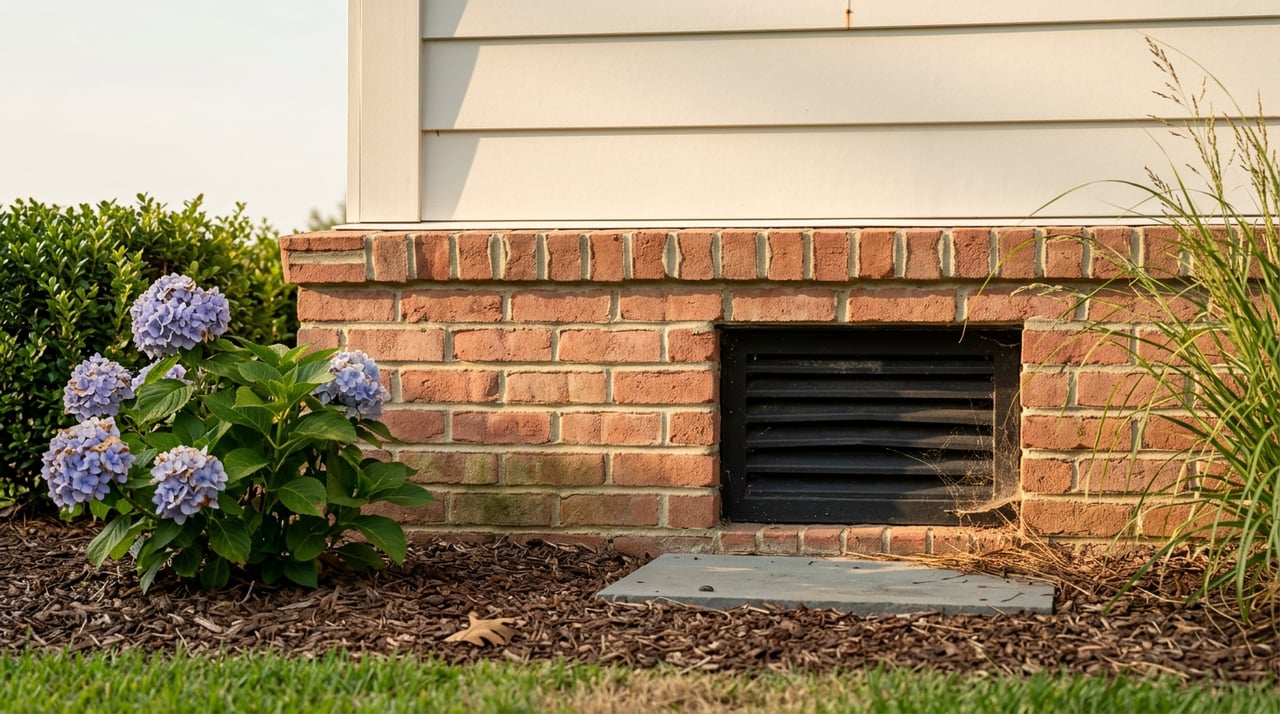
Lexington sits on clay-rich soils that expand when wet and contract when dry, and Groundworks' local operation, Mount Valley Foundation Services, has spent more than three decades documenting what that cycle does to crawl-space piers, floor joists, and slab edges. Add summer humidity in the 70s and a Lake Murray water table that pushes groundwater up against foundations after wet spells, and you get the single most common inspection finding in the area: crawl space moisture. That is not a national talking point. That is the Lexington pattern, and every buyer's inspector in the county knows it before they open a truck door.
Layered on top of the geology is the build era. Thousands of Lexington homes went up in the last two decades with a thin builder-grade vapor barrier tossed over the dirt, unsealed at seams and piers. In this climate those barriers begin to fail within a few years, and once humid air and ground moisture get past the plastic you see condensation on ductwork, damp insulation, and mold on relatively new floor joists. A local encapsulation typically runs $4,500 to $7,000, with larger or more complex homes ranging up toward $8,000 to $15,000. For lakeside lots near Lake Murray or the Saluda River, encapsulation is often paired with a French drain and sump pump because the water table gives the moisture somewhere it wants to go.
So when a Lexington buyer's inspector opens the disclosure and sees "No Representation" next to moisture, standing water, mold, or structural components, they do not read it as "the seller doesn't know." They read it as "start here."
The three windows sellers keep missing
The form is not a one-shot document. It sits inside a schedule of legal windows that quietly shape a Lexington transaction. Getting the disclosure right at signing is only the first of them.
| Window | What it is | Why it matters in Lexington |
|---|---|---|
| Pre-contract delivery | The completed disclosure must reach the buyer before or at the time the purchase agreement is signed. | Sellers who scramble to finish the form the night an offer arrives are the ones most likely to check "No Representation" out of speed rather than truth. |
| Amended-disclosure rescission | If the seller learns of a new defect after delivery but before closing, an amended disclosure is required and the buyer gets a fresh three-day rescission right, absolute, no justification needed. | A pre-listing inspection that surfaces a crawl-space issue two days before closing is not a favor to the buyer. It is a reset button. |
| Post-closing liability | Sellers face exposure for undisclosed known defects for up to three years after the sale. | Encapsulation contractors and roofers in Lexington keep records. Two years later, a buyer can pull a written report showing the moisture pattern existed at your closing. |
The middle row is the one that ends deals in Lexington. A seller who has been sitting on knowledge of a soft floor near a bathroom, and who tries to address it during the buyer's due diligence rather than before listing, is not "getting ahead of it." They are handing the buyer another three days to walk.
What a Lexington inspector actually pulls out of a 2005–2015 crawl space
If a seller wants to know which disclosure lines they cannot afford to leave blank, the honest answer is: the ones a local inspector will hit within the first thirty minutes of a site visit. On a typical Lexington home from the mid-2000s build wave, that report tends to include some version of the following.
- Vapor barrier condition. Torn at pier bases, unsealed at seams, pulled back from foundation walls. Photographed and captioned.
- Standing water or staining. Even a dry-day inspection catches historical waterlines on block piers and rust on HVAC condensate lines.
- Duct condensation and insulation sag. Wet fiberglass batts hanging below joists are a giveaway. Once flagged, the report will recommend a moisture professional's evaluation.
- Wood-destroying organism evidence. Frass, mud tubes, or prior treatment stickers on a pier. South Carolina purchase contracts routinely require a CL-100 letter, so this becomes its own paper trail.
- HVAC service history. Age of the unit and last documented service. A seller who kept the maintenance records has a real answer to give here. A seller who checks "No Representation" on the HVAC question after living in the house for eight years invites a full-system credit request.
None of those findings are exotic. They are the base rate for the housing stock. Which is exactly why the disclosure form's "No Representation" box, applied to any of them, looks less like caution and more like avoidance.
The pre-listing sequence that keeps the form honest and the price intact
The point of a pre-listing inspection in Lexington is not to force a seller to fix everything. It is to move the information into the seller's actual knowledge on the seller's own schedule, where repair bids are competitive and deadlines are measured in weeks instead of days.
A workable sequence looks like this. Order the inspection before staging or photography, while the crawl space, attic, and mechanicals are still fully accessible. Take the report and separate it into three columns: repair now, disclose and price for, and monitor. For the first column, get two written bids from local specialists such as Mount Valley Foundation Services, Attic and Crawl Space Solutions, or Cantey Foundation Specialists so the numbers on the disclosure are yours, not the buyer's inspector's ballpark. For the second column, write the disclosure entry in plain language with the date the issue was identified. For the third column, keep the documentation in the file so that if a buyer's inspector raises it, the paper trail already exists.
That sequence changes what "No Representation" means. Used sparingly, on items that genuinely fall outside the owner's knowledge, it holds up. Used as a default across half the form, it becomes the loudest signal on the page.
A short FAQ
Does a home sold "as-is" get out of disclosure in South Carolina? No. The disclosure requirement applies to most residential resales regardless of "as-is" language in the contract. "As-is" limits repair obligations. It does not override the seller's duty to disclose known material defects under Title 27, Chapter 50.
What sales are actually exempt from the form? The initial sale of a newly built home that has never been occupied is exempt, along with court-ordered transfers, foreclosure sales, some transfers between family members or co-owners, estate and trust distributions, and transfers involving government agencies. A resale of a five-year-old home in Lexington Farms is not exempt.
If a buyer's inspection turns up something I didn't know about, do I have to amend the disclosure? If the finding puts you in actual knowledge of a defect that was not disclosed, yes. An amended disclosure statement is delivered and the buyer gets a fresh three-day rescission window from receipt. This is why surfacing issues before listing is materially different from surfacing them during due diligence.
Can my agent fill out the form for me? No. The owner is responsible for the disclosure. An agent can help you understand the questions, but the "actual knowledge" is yours, and signing off on inaccurate information can expose both you and the agent under §27-50-65.
Let's Connect
If you are thinking about selling a Lexington home in the next six to twelve months, the useful conversation is not about price yet. It is about what a buyer's inspector will find, what your disclosure will say about it, and what order to do those two things in. That is the conversation Bill Prebeck has been having with Lexington and Lake Murray sellers since 2014, drawing on a licensed home-inspection background and a construction upbringing to translate a report into a plan.
Reach out when you are ready to walk the property together and get ahead of the form.