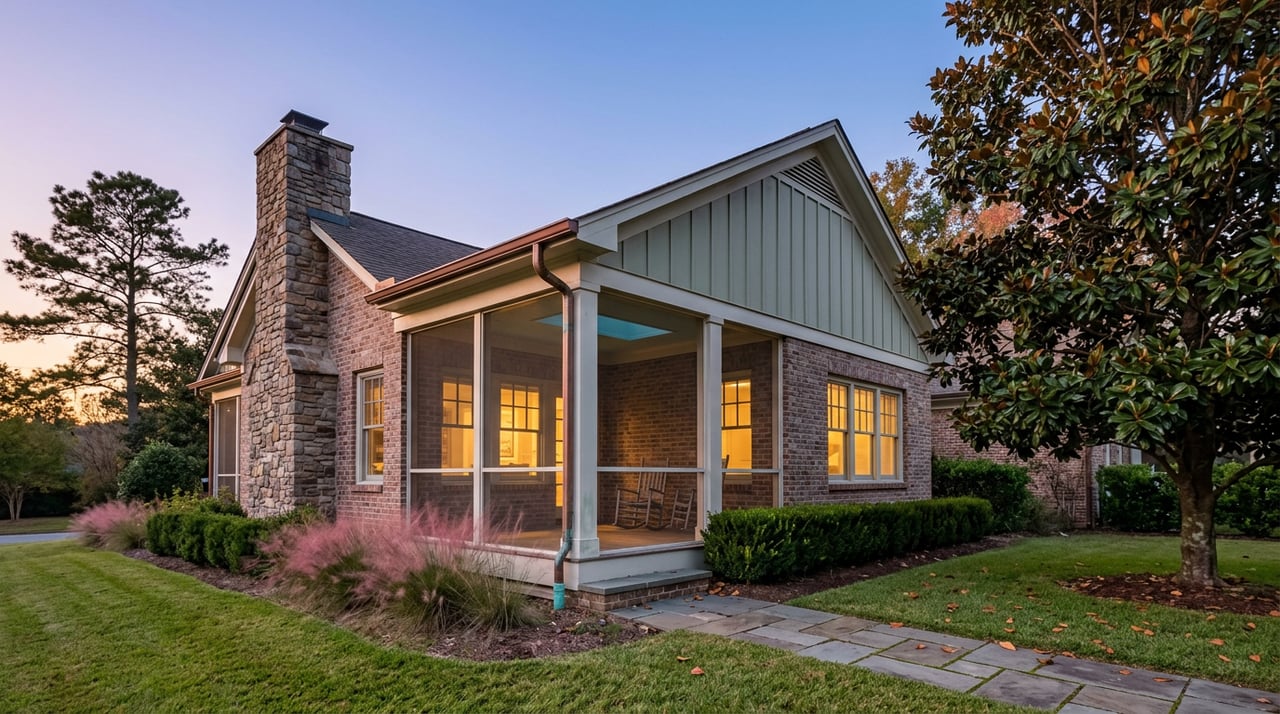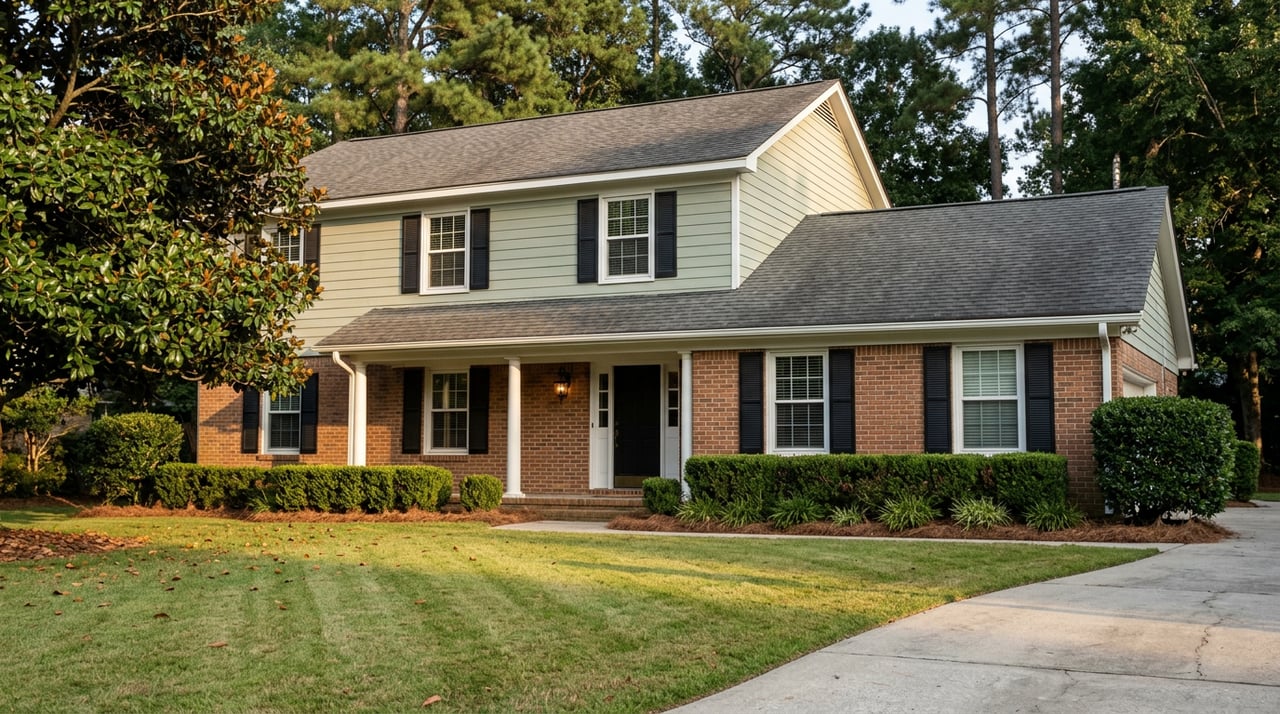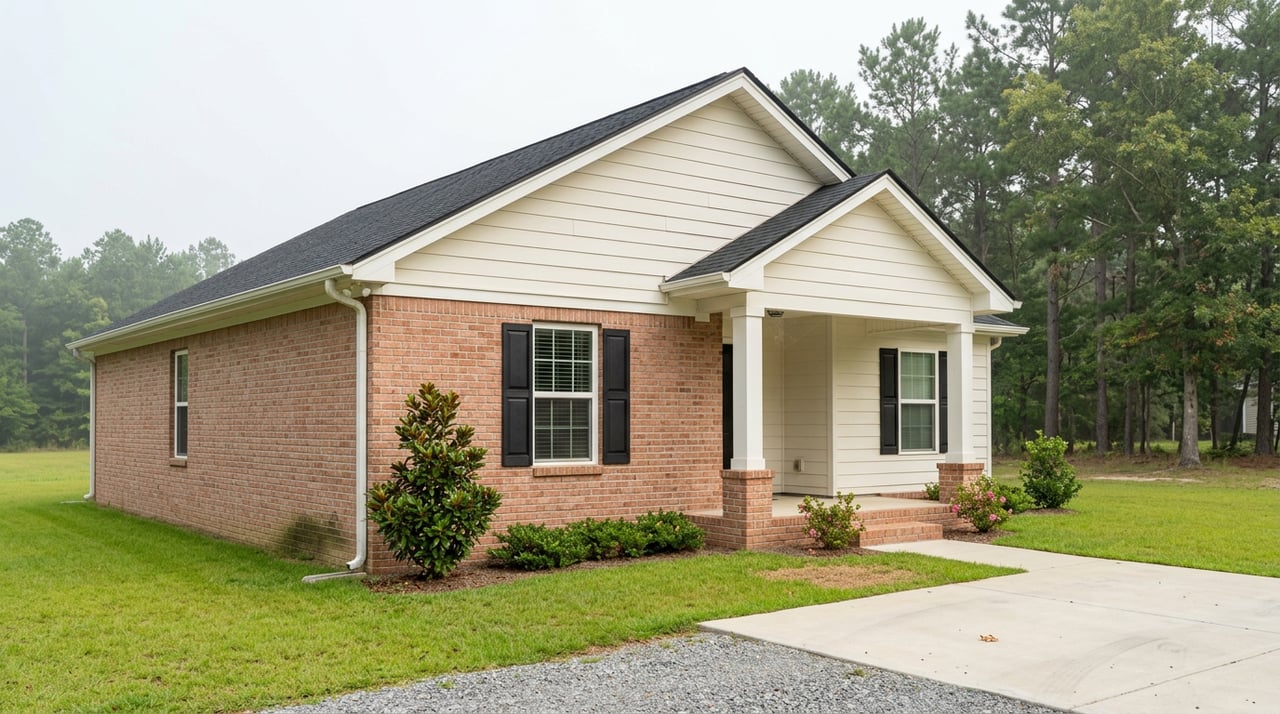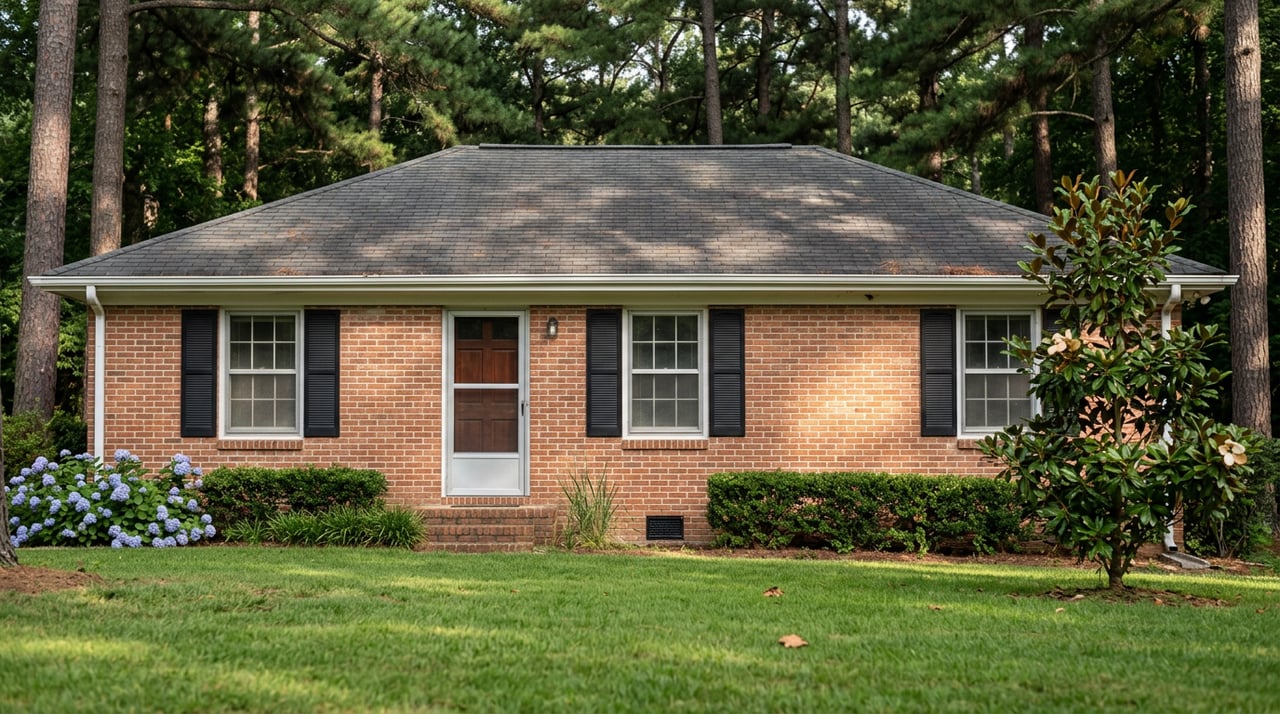
Irmo's July 2026 headline number is quiet and almost boring: a median list price of $323K, a 3% dip from a year earlier, at roughly $162 per square foot, with homes sitting a median 48 days on the market. Compare that to a newer Chapin build a few miles up SC-6 and the Irmo house looks like the deal. Sometimes it is. Often the price is doing exactly what it is supposed to do, and the reason is written on page three of a form the seller signs before you ever walk in.
The number that doesn't move, and the one that does
The $323K figure blends every corner of the 29063 and 29212 zip codes together. It flattens a 2022 build in Ballentine Cove into the same statistic as a 1978 split-level in Coldstream. For a buyer running a comp search on the portals, that flattening is a problem, because Irmo's for-sale inventory is heavier in the second category than most out-of-town buyers realize.
Coldstream, the largest connected neighborhood in the state at over 1,000 households, was built primarily in the 1970s with a second phase in the 1980s. The former Coldstream Country Club course now runs as walking paths owned and maintained by Irmo Parks & Recreation, and there is a long-term plan to eventually link the 4.5 miles of cart paths into the Three Rivers Greenway. Just west, Old Friarsgate's housing stock is centered on single-family homes built in the 1970s and 1980s, with the oldest examples dating to 1972 and the newest to 1988. New Friarsgate is the extension: most homes were built from the late 70s to the early 80s, and the neighborhood was one of Mungo Homes' first planned developments.
That build-year concentration is the market. It is also the discount. And it is the reason two houses at the same list price can be very different deals.
Question 14 is where the price gets explained
South Carolina's Residential Property Condition Disclosure Statement, prescribed by the Real Estate Commission and required under South Carolina Code § 27-50-10 et seq., asks the seller to describe, from actual knowledge, the water pipe material in the house. It also asks for the approximate year the structure was built, the approximate year the current roof was installed, and whether the seller has knowledge of any problem, malfunction, or defect in the plumbing system (Question 8) and the electrical system (Question 9). Sellers must answer each item or indicate the condition is unknown. A blank response is not acceptable.
The disclosure is not paperwork you skim after the inspection. The disclosure must be delivered to the buyer before or at the time of entering into a purchase agreement. If it is delivered after contract execution, the buyer has a right to rescind the agreement within three calendar days of receiving the disclosure statement. Read it before you write the offer, not after.
In an Irmo house from the 1978-to-1995 window, what the seller writes in that pipe-material field can move the true cost of the home by five figures.
Three build-year windows stacked on the same inventory
The reason 1970s and early-1980s Irmo houses trade at a discount is not sentiment. It is three specific materials-era risks that overlap the exact years those subdivisions were built.
| Risk window | Years | Overlaps in Irmo |
|---|---|---|
| Solid aluminum branch-circuit wiring | wide use ended in the mid-1970s; rarely encountered in construction after 1976 | Older Coldstream phase, Old Friarsgate pre-1976 homes |
| Polybutylene supply plumbing | 1978 through mid-1995 | Late-1970s and 1980s builds across Friarsgate and Coldstream Phase II |
| Lead-based paint (federal disclosure) | Pre-1978 | Oldest Coldstream and Old Friarsgate homes (1972 start) |
Not every house from these years has these materials. Many have been repiped or rewired. That is the point. The discount lives in the ones that have not.
Polybutylene: the checkbox that changes the loan
Polybutylene was a plastic used as home water piping from 1978 through mid-1995, installed in up to 10 million U.S. homes, and pulled from production after a wave of rupture claims. The failure mode is a chemical reaction with chlorine in municipal water supplies, which is exactly what serves Irmo through the City of Columbia and Lake Murray system. The pipes fail from the inside, on their own timeline.
For a buyer, the consequences are financial, not cosmetic. FHA, VA, and Fannie Mae may deny loans if PB plumbing is present unless replaced by a licensed plumber. On the insurance side, carriers pivot or decline coverage on homes older than 1997 with polybutylene plumbing, and where they will write, the policy often comes with a water loss exclusion that leaves the homeowner exposed to the exact failure mode the pipes are known for. Most buyers ask for full replacement of PB pipes before purchase or request a $10,000 to $20,000 price reduction or repair credit.
Read Question 14, or the "describe water pipes" line on the SC form, before you fall in love with the kitchen.
Aluminum branch circuits: the smaller repair, still real
Solid aluminum branch-circuit wiring shows up most often in homes built or expanded from 1965 to 1975. The core issue is thermal: aluminum has a higher coefficient of thermal expansion than copper, which loosens connections over time and can lead to arcing at outlets and switches.
You do not have to rip out the walls. Code accepts pigtailing the aluminum-to-copper connections or replacing outlets with CO/AL-rated devices. A ballpark from the trades has full rewiring of a typical ranch at $8,000 to $15,000, and copper pigtailing at every outlet and switch at $2,000 to $4,000, which usually satisfies insurers. In an Old Friarsgate ranch built in 1974, that scope is a line item, not a deal-breaker, once it is priced.
What the median actually buys, once the disclosure is priced in
Assume two houses, both listed near the $323K Irmo median.
House A: 1996 build in a newer Irmo pocket. Copper supply lines, all-copper branch circuits, updated panel. The disclosure form has clean "no known problem" answers on Plumbing and Electrical. The list price is the price.
House B: 1981 build in New Friarsgate. Original polybutylene supply, one panel of solid aluminum branch circuits still visible in the attic run. Listed at the same $323K.
Before you even open a spreadsheet, House B is carrying, on the low end, a $10,000 repipe credit and a $2,000 aluminum-wiring remediation. On the high end, closer to $20,000 in repipe and $10,000 in rewiring, plus a search for a carrier who will still write the policy. The house is not overpriced. The house is priced for a buyer who knows what to ask for. If you are the buyer who does not ask, you pay the discount as a hidden tax over the first three years of ownership.
That is the market's mechanism, and it is what the median does not tell you.
When the older Irmo house is still the right buy
None of this argues against buying in Coldstream or Friarsgate. Plenty of these homes have been fully repiped in PEX and pigtailed at every device, with paperwork to prove it. When they have, the buyer gets the neighborhood, the lot, and the trees without the materials tax.
The advantages of the older Irmo core are real. Friarsgate lot sizes vary around half an acre, with square footage from 1,000 to 3,000 square feet. Friarsgate has no HOA. Coldstream sits less than 15 miles from downtown Columbia, less than 10 miles from downtown Lexington, and next to the Lake Murray Dam, Saluda Shoals Park, and the Harbison corridor. The trees are mature. The streets are quiet. A 1978 brick ranch on a wooded half-acre is not a starter home in a subdivision full of them. It is a specific product, priced for a specific buyer, and the disclosure form is the tool that keeps the price honest.
Six questions to ask before you write the offer on any pre-1996 Irmo home
- What does the seller's completed disclosure statement say for water pipe material and for the plumbing and electrical "problem" questions?
- When was the current roof installed, per Section II of the disclosure?
- Are there receipts, permits, or plumber's letters documenting a repipe from polybutylene to PEX or copper?
- Has an electrician inspected for solid aluminum branch circuits, and if present, have connections been pigtailed with CO/ALR-rated devices?
- Will your intended homeowner's insurance carrier bind a policy on the property with no water-loss exclusion?
- If FHA or VA financing is on the table, has the lender flagged the plumbing type?
Answer those six and the $323K median stops being a blur. It becomes two very different houses at the same list price, and you will know which one you are buying.
FAQ
Does an "As Is" listing waive the seller's disclosure duty? No. A common misunderstanding is that selling a property "as is," including with the South Carolina Association of Realtors Form 311 "As Is" Addendum, eliminates the seller's legal duty to disclose known material defects on the disclosure form. That is incorrect in South Carolina. The statutory duty to disclose known defects persists even in an "as is" sale.
Can a home inspector confirm polybutylene is present? An inspector can identify visible pipe at fixtures, in the crawl space, and near the water heater. Home inspectors are not required to note the presence of polybutylene, and no tests for weaknesses should be performed. Any deterioration happens from within and cannot be detected without turning off the water and dismantling the pipe, which is far beyond the standards of practice. A licensed plumber can write a condition letter that carriers will sometimes accept.
Is polybutylene always gray? PB is most commonly gray, but it can also be white, silver, black, or blue. Blue PB is used primarily outdoors and only for cold water. Color alone is not a diagnosis.
Let's Connect
Buying an older Irmo home is a good decision made with the disclosure form in your hand and a repair budget priced before you sign. As a licensed South Carolina agent and home inspector, that is the exact read Bill Prebeck is built to give you on a Coldstream ranch, a Friarsgate split-level, or any pre-1996 house where the median price is quietly doing the negotiating for you. Reach out when you want a second set of eyes on the pipe run before the offer goes in.