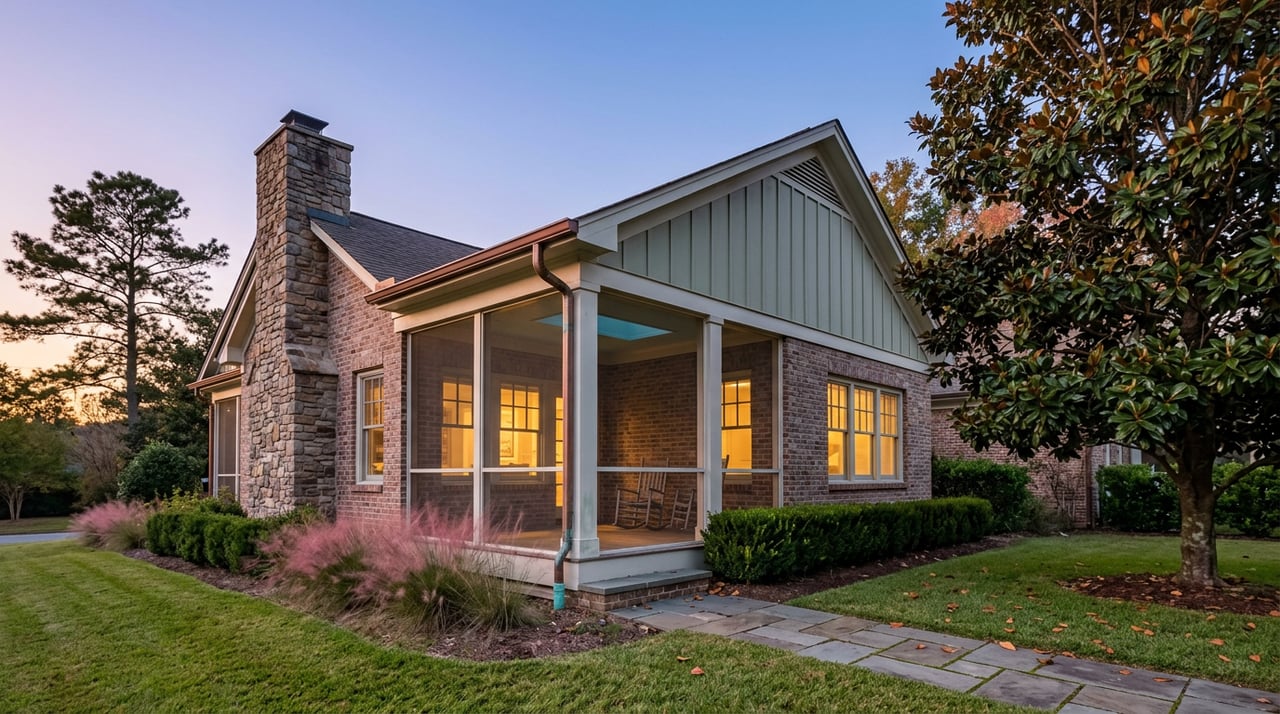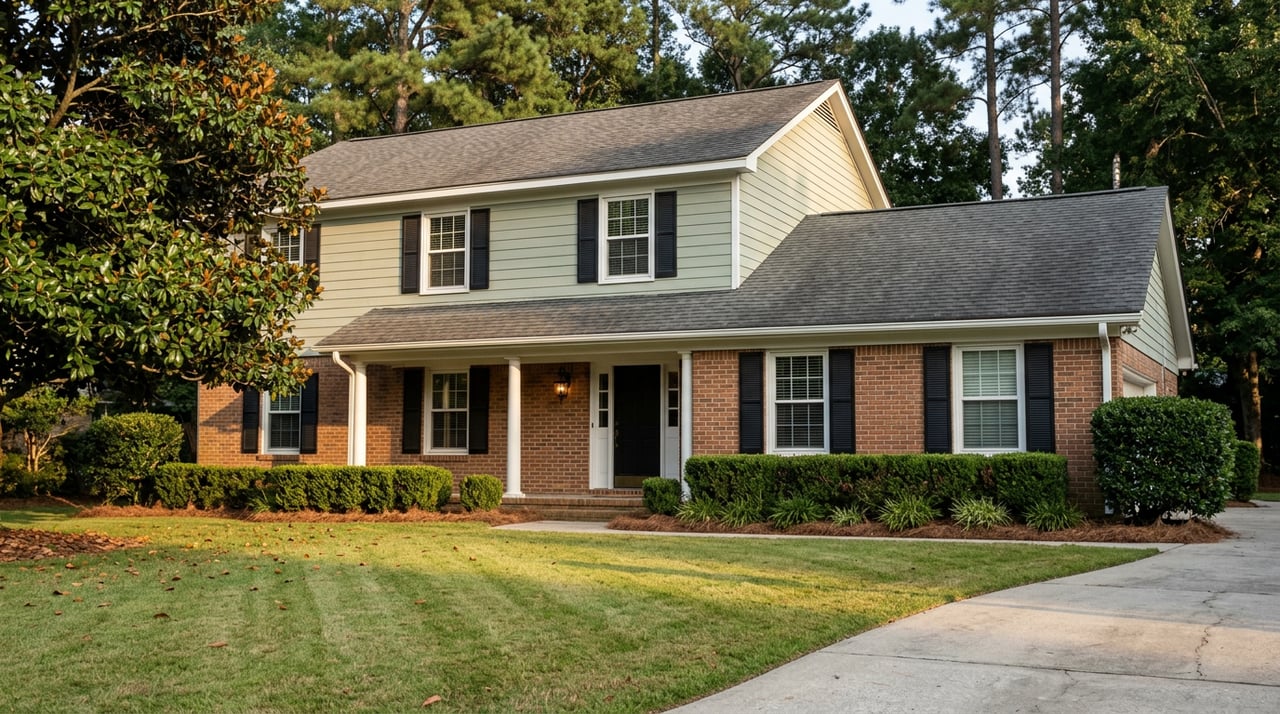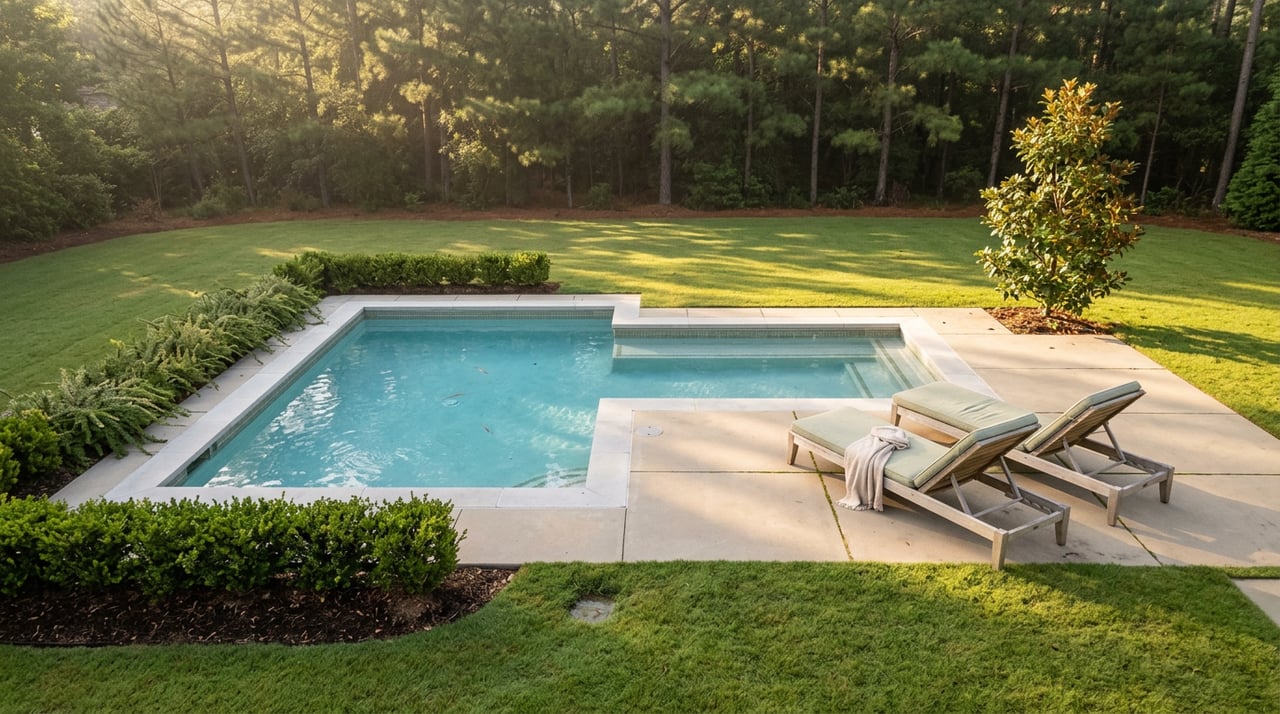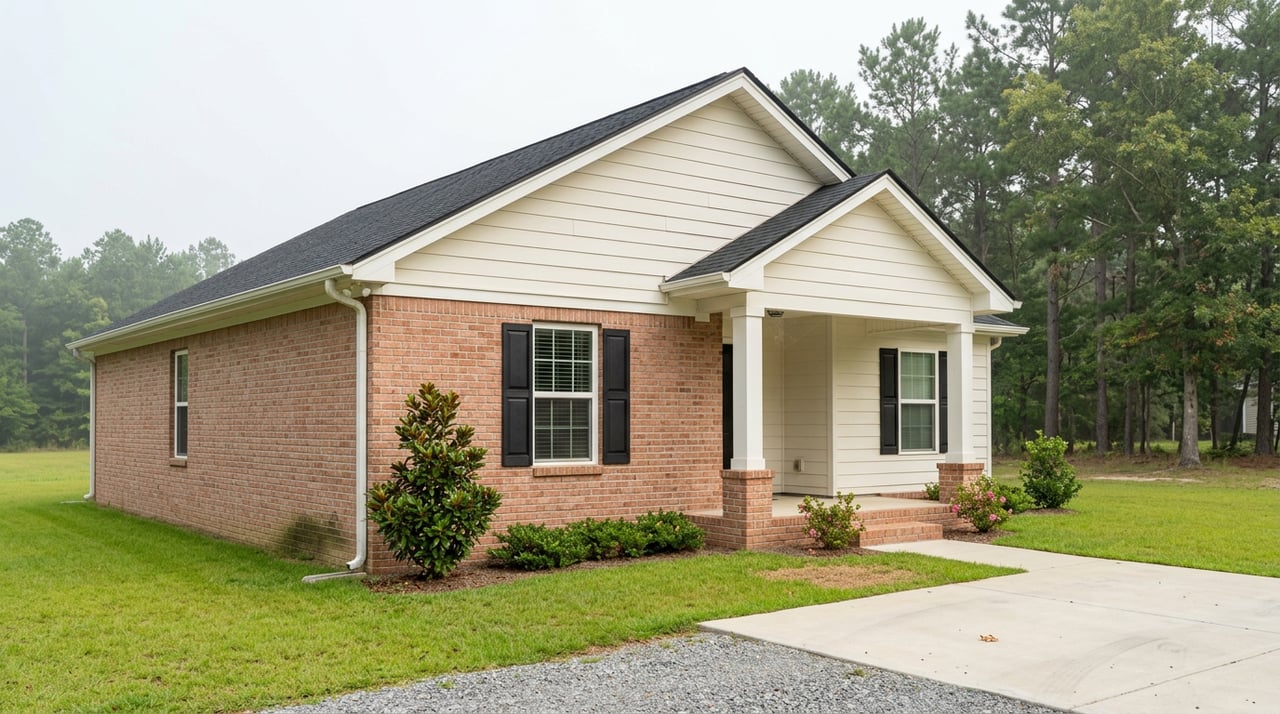
Nakia Brown, a Coldwell Banker Realty agent who works Newberry County, tells buyers cross-shopping Prosperity against Chapin or Lexington that the appeal comes down to "the pricing and the lot sizes." She's not wrong. But that framing doesn't leave room to mention that two of Prosperity's newest lakefront communities, built within a few years of each other on the same stretch of Lake Murray shoreline, give buyers two flatly different answers to the one question that actually determines what living there feels like: can you put a dock on the water in front of your house.
That question, not the median price you'll see on a portal search, is the real fork in the road for anyone looking at Prosperity right now.
The number that means five different things
Search "Prosperity SC median home price" and you'll get answers that don't agree with each other. One source put Prosperity's median sale price at $305,000 in January 2026, up 33 percent from a year earlier. Another shows a median sale price of $270,000 over the trailing 12 months. A third lists an average home value north of $369,000. A fourth, pulling from active listings in the 29127 zip code, shows a median list price above $570,000.
None of these sources is wrong. They're measuring different slices of a market that's small enough for the slices to matter. Prosperity is a town of just over 1,000 residents, and its housing stock is genuinely bimodal. On one end you have modest in-town homes and manufactured housing on small lots. On the other you have new construction on acreage lots along the lake, some pushing past $700,000. When your total inventory in a given window is a few dozen or a few hundred properties, a handful of high-end lake closings can swing the median by six figures in either direction. That's not a market being deceptive. It's a small town where a single subdivision's closing activity can move the whole number.
The practical takeaway for a buyer: don't anchor to a single median you find online. Ask what's actually closing in the price range and lot size you're considering, because the town-wide figure is averaging together two different housing markets that happen to share a zip code.
Why the lot line matters more than the zip code
Brown's read on the mechanism behind Prosperity's growth is that it comes down to lot size and taxes, not the town's name recognition. According to her, homes on less than half an acre in Prosperity tend to sell in the $200,000 to $400,000 range, while homes on more than half an acre typically run $500,000 to $1 million. That's a meaningful spread, and it's driven by something specific: most new construction across the Midlands sits on lots of 0.1 to 0.2 acres, while Prosperity's newer developments are routinely platting 0.3, 0.4, and half-acre-plus lots. Buyers aren't paying more for Prosperity as a brand. They're paying for land that other suburban new-construction markets simply aren't offering at the same price point.
Two other factors are pulling people in. Newberry County is home to major employers including the Samsung plant in Newberry and SWM International, and Brown notes that compared to Lexington County, home to Columbia and Chapin, Newberry County has "lower taxes, and the housing prices are more affordable." The numbers back her up. Newberry County's median effective property tax rate runs close to 0.77 percent with a median annual bill around $829, while Lexington County's median effective rate is closer to 0.60 percent with a median bill around $1,084, and Chapin specifically runs closer to $1,909 a year. For a buyer comparing a Prosperity lake lot to a similar property in Chapin, that gap is a real, recurring cost difference, not a rounding error.
Same lake, same town, two very different docks
Here's where the median price stops being useful and the subdivision covenant starts mattering more than almost anything else on the spec sheet.
Woodside Shores is a newer lakefront development on Lands End Lane, built out largely by Conquest Homes, with lots stretching along more than 2.5 miles of shoreline. It's a genuinely well-planned community: paved roads, underground power, public water, natural gas, high-speed internet, a community picnic shelter, and a dog park. Homes there have ranged from a 2,038-square-foot plan starting around $259,900 up to move-in-ready homes near $548,000 for roughly 2,750 square feet. The subdivision carries a modest HOA fee, around $360 a year plus a one-time $300 capitalization fee at closing.
The general rule at Woodside Shores is that private docks are not part of the deal. Lots there are marketed as restricted from private docks under Dominion Energy's rules for that stretch of shoreline, with water access running through a shared double boat ramp instead. But the rule isn't perfectly uniform even within the community. A 2026 land listing in the Breakwater section of Woodside Shores advertised that its individual dock permit had already been granted, with the approval letter received in March 2026, a specific exception to the broader no-private-dock marketing language used for the rest of the development. That's the trap: the subdivision name tells you the general policy, not what's true for the specific lot in front of you.
Stewart Landing, a roughly 200-acre waterfront community also in Prosperity, was built around a different premise from the start. It's a golf cart-friendly neighborhood with a clubhouse, an amphitheater, a private gym, a marina, and miles of hiking trails, and several of its listings come with deeded boat slips attached to the lot itself. Recent listings there have included a home with a shared deep-water dock and boat lift already in place, and lot sales that specifically advertise an assigned slip number, such as slip D13 or slip D2, as part of the purchase.
Two communities, same town, same lake, same general era of construction. One markets itself around a no-private-dock policy that at least one lot has individually escaped. The other built deeded water access into the product from the start. A buyer scrolling listing photos of "new construction, Lake Murray access" in Prosperity could easily land in either one, or in one exception lot inside the other, without registering that they're choosing between fundamentally different relationships with the water, not just two different floor plans.
What to actually check before you write an offer
If you're comparing lake lots or new-construction homes in Prosperity, the price per square foot and the median comps matter less than these specifics:
- Whether the subdivision's covenants or restrictive documents explicitly allow or prohibit private docks, separate from what the shoreline itself might permit
- Whether a boat slip is deeded to the specific lot, assigned by the HOA, or simply not part of the offering
- The HOA's annual fee and any one-time capitalization fee due at closing
- Whether the lot requires an engineered septic system, common on larger acreage tracts without access to public sewer
- The minimum square footage requirement for a site-built home, since some lakefront subdivisions restrict smaller builds
- Whether utilities including public water, natural gas, and high-speed internet are already run to the lot or still pending
None of these show up in a median price. All of them show up in the plat and the HOA documents, which is exactly where they should be checked before an offer goes in, not after.
A short FAQ
Does every Lake Murray lot in Prosperity come with dock rights? No. Dock rights vary by subdivision and sometimes by individual lot within the same subdivision. Some Prosperity communities restrict private docks entirely in favor of shared community access points, while others build deeded slips into specific lots. This is a covenant-level and sometimes a permit-level detail, not something you can assume from the fact that a property touches the lake.
Is Prosperity actually cheaper than Chapin? On a like-for-like basis, often yes, particularly on property taxes, where Newberry County's rate runs meaningfully higher in percentage terms but off a lower assessed base, while Lexington County and Chapin specifically carry higher median annual bills. Lot size also stretches the value further in Prosperity, since new construction there is commonly built on lots two to four times larger than typical new-construction lots elsewhere in the Midlands.
Why do online median price estimates for Prosperity vary so much? Prosperity's housing stock is bimodal, mixing modest in-town homes with multi-acre new-construction lake properties, and the total number of sales in any given window is small enough that a handful of high-end closings can shift the median significantly. Treat any single median figure as a starting point for a conversation, not a final answer.
Prosperity rewards buyers who read the covenant before they read the comps. If you're weighing a lake lot here against something in Chapin or Lexington, or trying to figure out which Prosperity subdivision actually matches how you want to use the water, Bill Prebeck has walked this exact comparison with clients on both sides of it. Let's Connect.